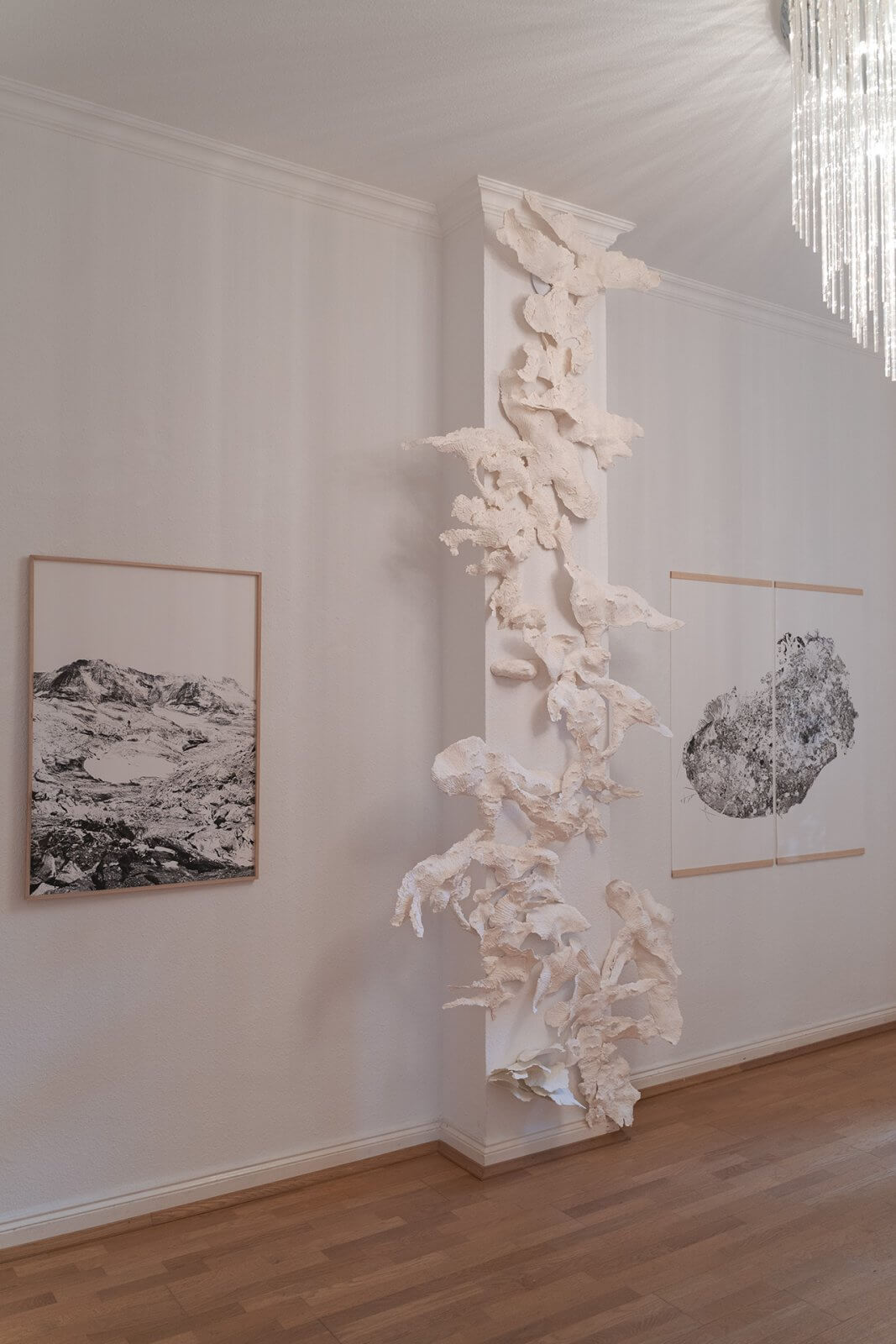
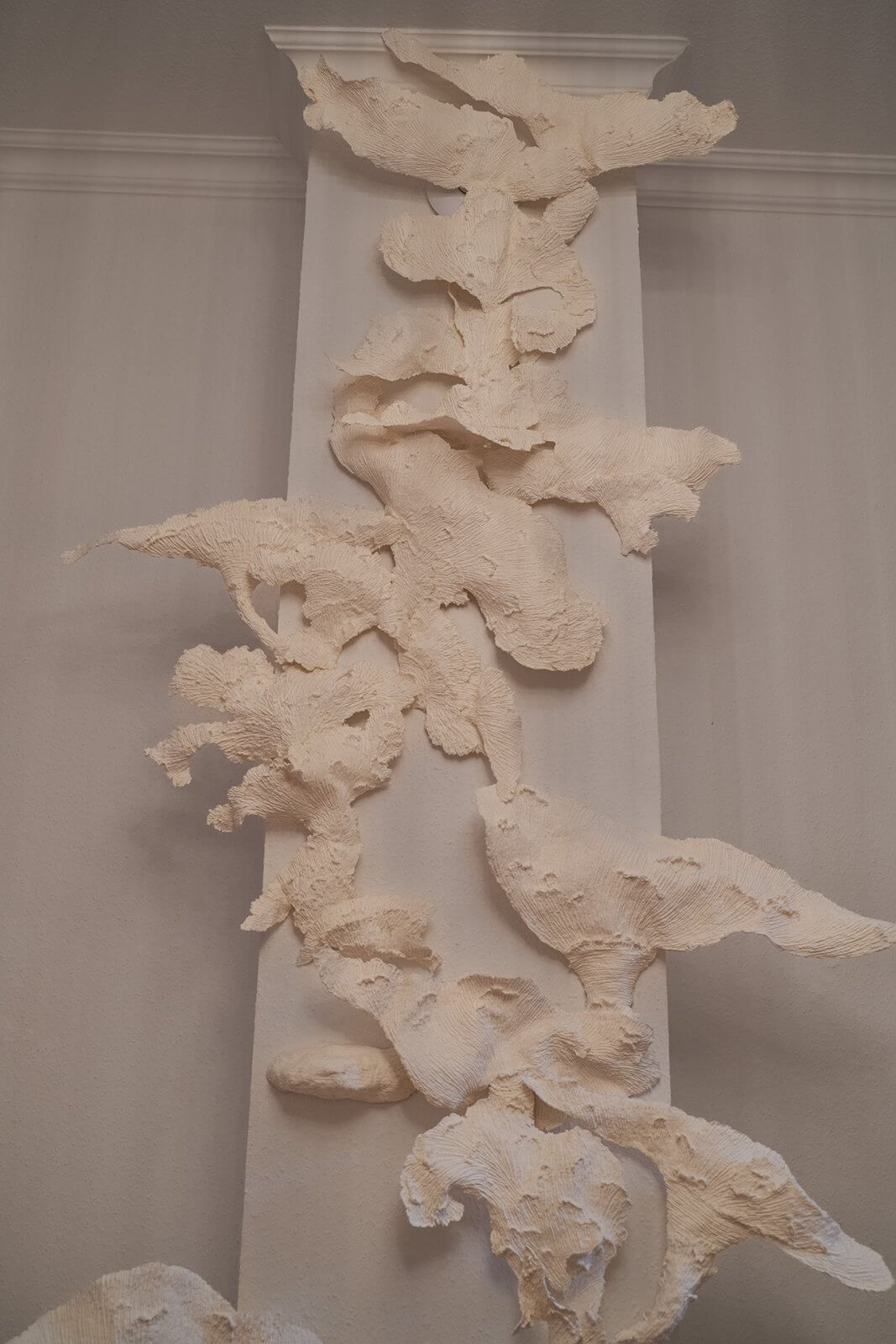
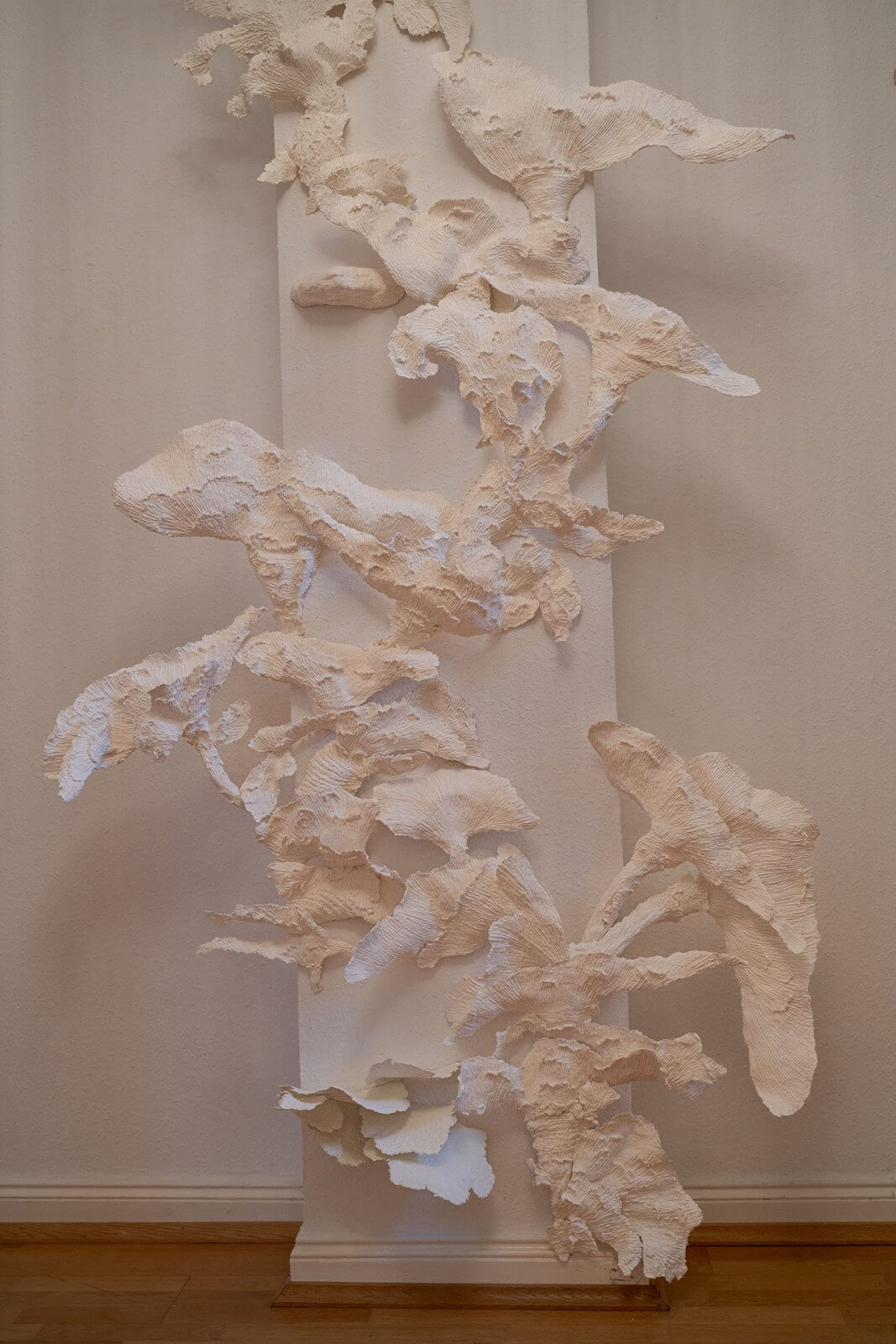
Baroque Cardboard is a work developed from cardboard as a material of structure, compression, and transformation. The title joins an everyday industrial material with a historical language of movement, density, and excess. In this project, cardboard becomes a surface that can bend, fold, swell, and hold tension. Through these shifts, Baroque Cardboard opens a field between relief, ornament, pressure, and instability.
Baroque Cardboard and material movement
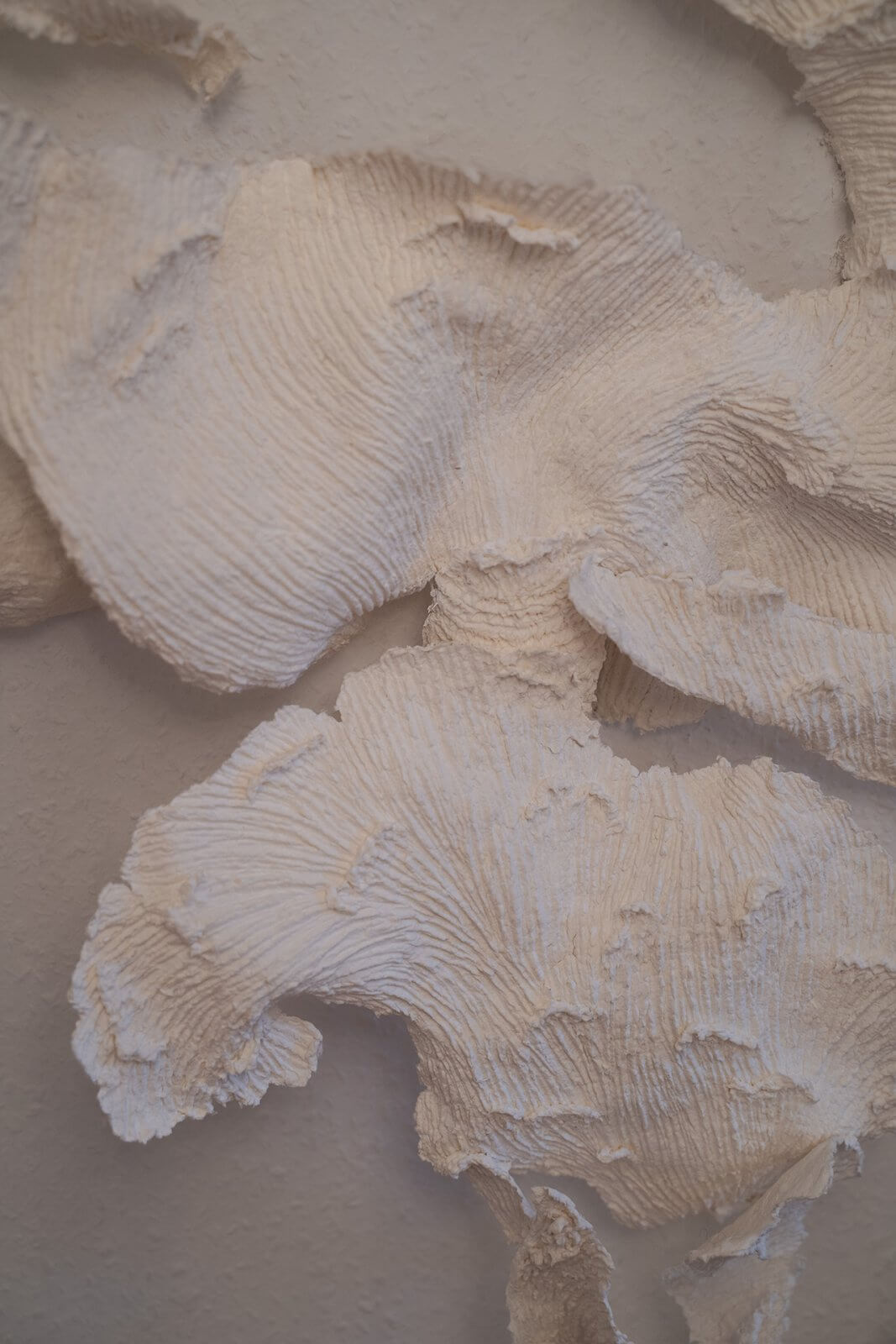
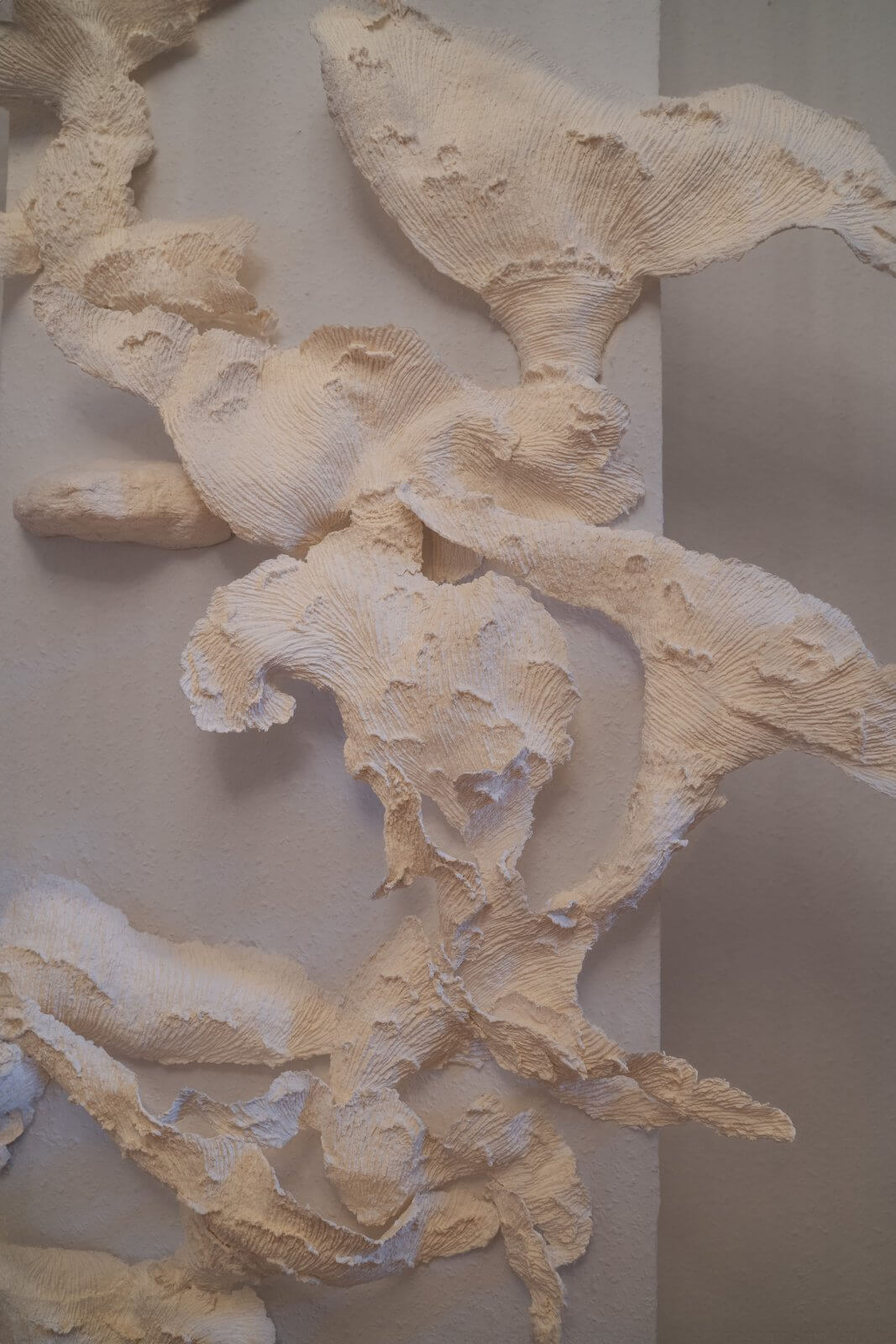
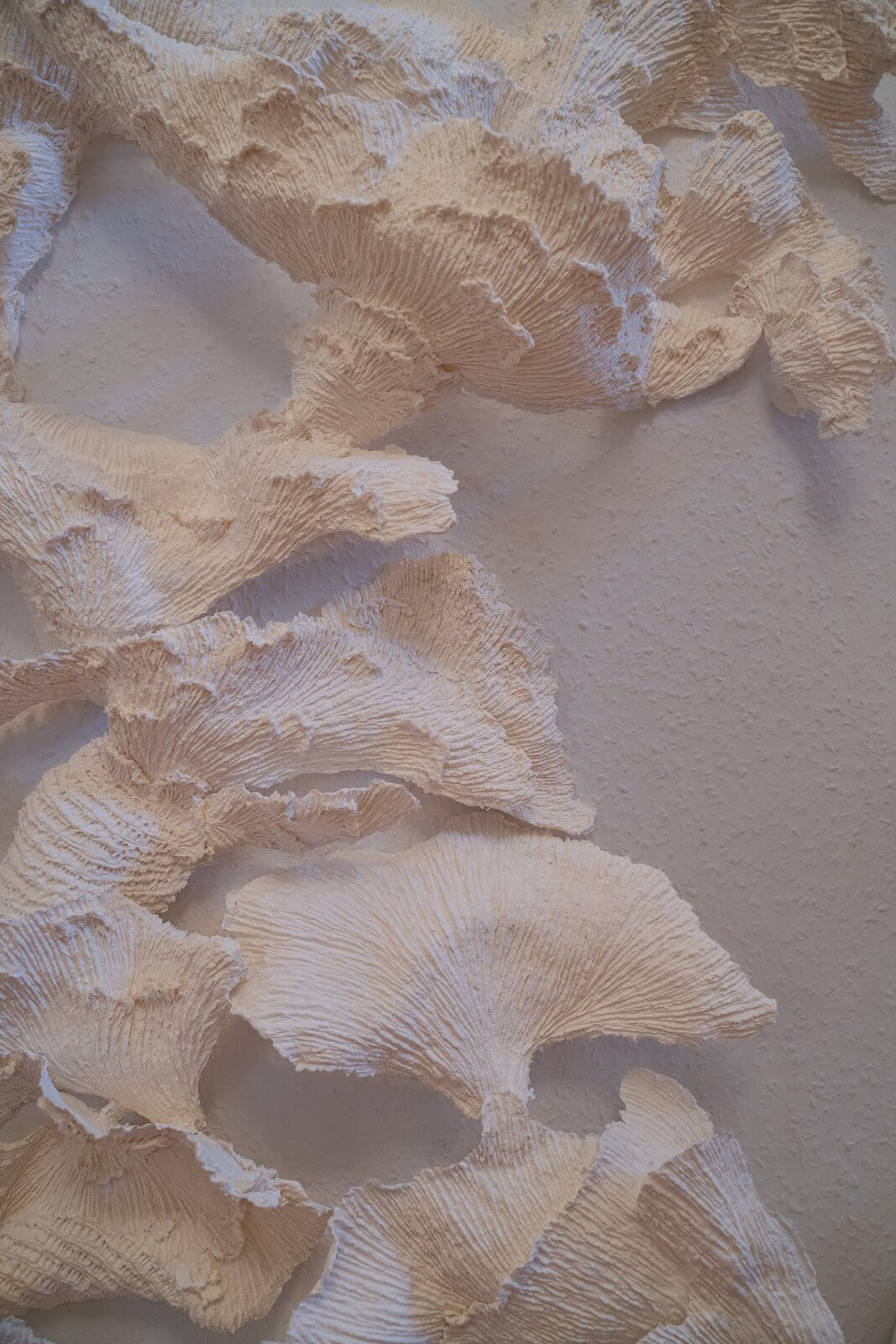
The work explores cardboard as a carrier of rhythm, volume, and spatial force. Its edges, layers, and corrugations create a material logic that is both fragile and assertive. Pressure marks, folds, and deformations remain visible and become part of the visual structure. This gives the surface a strong physical presence and allows the work to move beyond flatness into a relief-like condition.
Within Baroque Cardboard, the term baroque does not function as quotation or illustration. It points to a heightened sense of motion, curvature, density, and dramatic accumulation. Cardboard is treated as a responsive substance that stores handling, strain, and change. The material records compression and expansion and turns these processes into form. Through this approach, the work engages with transformation as something structural and bodily at once.
Surface plays a central role in this project. Light, shadow, elevation, and indentation shape the visual experience and activate the relation between image and object. The work remains close to material research and to the question of how a modest substance can carry complexity, tension, and spatial charge. In this way, cardboard becomes more than support. It becomes the site where movement, density, and form are generated.
Medium
Handmade cardboard
Column Dimensions
365 × 64 cm cm
Exhibited at
Villa van Delden, Ahaus, Germany — exhibition Un-/Tiefen (Un-/Depths), 22 June – 20 July 2025